

There is a moment, deep inside a misty Ugandan forest, when the undergrowth parts and a mountain gorilla turns to look at you — unhurried, unbothered, ancient in its gaze — and every expectation you carried into the wilderness dissolves completely. This is Uganda. Not the Uganda safaris Africa of hurried headlines or half-remembered geography lessons, but the Uganda of Churchill’s famous declaration: the Pearl of Africa, a country so lush, so biologically abundant, and so strikingly beautiful that it renders superlatives inadequate.
Uganda sits at the crossroads of East and Central Africa, straddling the equator with quiet confidence. It is a country where the snow-capped Rwenzori Mountains — the legendary Mountains of the Moon — rise above equatorial rainforests, where the world’s longest river is born on the shores of Lake Victoria, and where the density of wildlife per square kilometre rivals anywhere on earth. Yet for all its splendour, Uganda and Kenya safaris Africa remains one of Africa’s most underappreciated safari destinations, drawing a fraction of the visitors that flock annually to Kenya or Tanzania.
That is precisely its greatest advantage.
For the discerning traveller, Uganda offers something increasingly rare on the modern African safari circuit: intimacy. Encounters with wildlife happen without the crowd of a dozen safari vehicles. Gorilla treks unfold in groups of eight. Boat safaris glide past hippo pods in near-solitude. Here, the bush is still genuinely wild, the silences are still genuinely silent, and the experiences are still genuinely extraordinary.
This guide covers everything you need to know to plan an unforgettable Uganda safari in Africa — from its legendary national parks to practical travel tips, cultural highlights, and the conservation story that makes it all possible.
Why Uganda Is Africa’s Most Compelling Safari Destination
Ask seasoned African safari travellers which destination surprised them most profoundly, and Uganda appears on that list with striking regularity. Its reputation is built not on marketing budgets but on word of mouth — the testimony of those who came expecting competence and left having experienced something transformative.
Uganda and Congo safaris Africa geographical diversity is the foundation of everything. The country is compact by African standards — roughly the size of the United Kingdom — yet within its borders it contains savannah, tropical rainforest, montane forest, wetlands, crater lakes, and Rift Valley escarpments. This diversity of habitat supports a corresponding diversity of wildlife that is, in global terms, exceptional.
The numbers alone are striking. Uganda hosts:
- More than 1,000 bird species — the highest count of any country in Africa and more than the combined total of Europe
- 13 primate species, including mountain gorillas, chimpanzees, and red colobus monkeys
- Nearly 500 mountain gorillas — approximately half of the entire global wild population
- The Big Five across its national parks, with rhinos at Ziwa Sanctuary completing the set
- 10 national parks and 12 wildlife reserves, each with a distinct ecological character
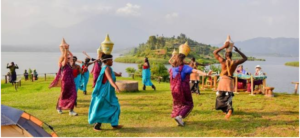
Beyond wildlife, Uganda offers a human and cultural richness that elevates any safari into a fuller journey. The Batwa pygmies, formerly forest-dwelling inhabitants of Bwindi’s ancient woodlands, share their ancestral knowledge through immersive cultural experiences. The Banyankole cattle herders of western Uganda maintain traditions stretching back centuries. The bustling markets of Kampala pulse with creativity, cuisine, and commerce that would fill a separate guide entirely. Uganda rewards those who look up from the binoculars occasionally.
The National Parks That Define a Uganda Safari
Bwindi Impenetrable National Park
Few places on earth carry a name quite as evocative as Bwindi Impenetrable National Park, and fewer still live up to it so completely. Located in southwestern Uganda along the border with the Democratic Republic of Congo, Bwindi is a primordial forest — ancient, dense, and alive with a biological complexity that scientists are still working to fully understand.
Bwindi is the centrepiece of any Uganda safari for one overwhelming reason: mountain gorillas. Approximately 500 individuals, organised into more than 50 family groups, inhabit these forests. Around half of these families have been habituated to human presence over years of careful work by rangers and researchers, allowing visitor trekking to proceed with minimal disturbance to the animals.
The trekking experience begins before dawn. Groups of eight gather at a park briefing point, receive orientation from their guide, and then enter the forest — sometimes for as little as an hour of walking, sometimes for a full day of climbing through terrain that demands respect. When the family is found, the sixty-minute visit begins. Cameras are raised. Breath is held. And then, almost inevitably, it is exhaled in something close to wonder.
Gorilla permits cost USD 800 per person and are strictly limited. Book a minimum of six months ahead for peak season travel. The permit fee contributes directly to gorilla conservation and community development programmes.
Murchison Falls National Park
In the northwest of Uganda, the Victoria Nile narrows without warning and flings itself through a seven-metre gap in the rock before plunging 43 metres into a churning red pool below. Murchison Falls is among the most powerful waterfalls on earth, and the Bwindi impenetrable forest national park that bears its name is Uganda’s largest — a vast, sun-drenched wilderness of 3,840 square kilometres that feels like the Africa of old adventure novels.
Game drives along the north bank of the Nile produce sightings of lions, elephants, leopards, buffaloes, Rothschild’s giraffes, and Jackson’s hartebeest with satisfying regularity. The Rothschild’s giraffe is of particular conservation significance — once reduced to fewer than 200 individuals, captive breeding and translocation programmes have slowly increased their numbers, and Murchison holds one of the most important free-ranging populations.
The park’s boat safari, cruising from Paraa upstream to the base of the falls, is one of Uganda’s finest wildlife experiences. The riverbanks teem with hippos — pod after pod, hundreds in total — alongside Nile crocodiles of formidable size, elephants wading into the shallows, and an astonishing diversity of birds including the prehistoric-looking shoebill stork, one of the most sought-after avian sightings in all of Africa.
Queen Elizabeth National Park
Queen Elizabeth National Park straddles the equator in western Uganda, covering over 1,970 square kilometres of remarkable ecological diversity. Lake Edward and Lake George bracket the park to the south and north respectively, connected by the 32-kilometre Kazinga Channel — the beating heart of the park’s wildlife viewing.
A boat cruise on the Kazinga Channel delivers wildlife sightings of extraordinary density. Hippos crowd the shallows in numbers that seem almost implausible. Buffalo herds drink at the water’s edge while fish eagles cry overhead. Pied kingfishers hover and plunge. African skimmers skim the glassy surface at dusk. It is a wildlife spectacle that rewards both the first-time visitor and the most experienced safari veteran.
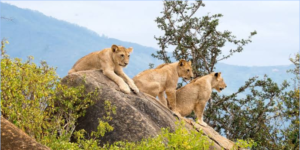
Queen Elizabeth is also famous for its tree-climbing lions, found in the Ishasha sector in the park’s southern reaches. Lions climbing into the branches of towering fig trees is a behaviour documented in only two locations globally, and watching a pride arrange itself among the canopy with the casual authority of animals entirely confident in their world is a safari moment of the first order.
Kibale National Park
Kibale National Park in western Uganda is to primate enthusiasts what the Serengeti is to the lion lovers — the definitive destination, the standard against which all others are measured. With 13 primate species and the highest density of primates in Africa, Kibale is extraordinary. Its star attraction is chimpanzee tracking with habituated communities that allow extended, close-range observation of complex social behaviours: the alarming volume of territorial calls, the deft skill of tool use, the tender interaction between mother and infant.
The Bigodi Wetland Sanctuary, a community-managed conservation area on Kibale’s border, offers superb guided walks through papyrus swamp and riverine forest where red colobus monkeys, L’Hoest’s monkeys, and black-and-white colobus monkeys move through the canopy above. Birding here is exceptional, and the economic benefits flow directly to the local community — a model of conservation tourism at its most functional.
Practical Safari Planning
Best Time to Visit
Uganda’s dry seasons — June to September and December to January — offer the most reliable trekking conditions and the clearest forest trails. These are peak seasons, and accommodation and permit availability tighten considerably. Book early.
The wet seasons (March to May; October to November) bring emerald landscapes, excellent birdwatching, and significantly fewer visitors. Roads in remote areas can become challenging, but the trade-off in tranquillity and atmosphere is substantial for those prepared for occasional mud.
Getting There
International flights arrive at Entebbe International Airport on Lake Victoria’s northern shore. Major connecting hubs include Nairobi, Addis Ababa, Kigali, and Dubai. Overland travel between parks is by 4×4 vehicle; domestic charter flights to park airstrips — at Pakuba (Murchison), Kasese (Queen Elizabeth), and Kihihi (Bwindi) — save significant road time and are worth the investment on tighter schedules.
Vaccinations and Health
A yellow fever vaccination certificate is mandatory for entry. Malaria prophylaxis is essential throughout the country. Comprehensive travel insurance, including emergency medical evacuation cover, is non-negotiable.
Accommodation
Uganda’s safari accommodation spans ultra-luxury forest lodges to community-run guesthouses. In Bwindi, Sanctuary Gorilla Forest Camp and Mahogany Springs set the benchmark for luxury. Mid-range lodges in all major park areas offer excellent value and genuine comfort. Budget bandas and tented camps provide access for cost-conscious travellers without sacrificing the core experience.
Conservation: Why Your Visit Matters
Uganda’s conservation model is among the most compelling in Africa. Gorilla permit revenue funds ranger salaries, veterinary care, anti-poaching patrols, and community infrastructure — schools, health centres, agricultural support — in villages that border protected areas. The result is a conservation framework in which local communities have a direct, tangible stake in wildlife survival.
The outcome speaks for itself. Mountain gorilla numbers have grown from fewer than 300 in the late 1980s to over 1,000 today. Uganda’s gorillas are the only great ape population on earth whose numbers are increasing. This is not a coincidence. It is the product of deliberate, sustained, and community-centred conservation effort — and every tourist who purchases a permit, pays a park entry fee, or hires a local guide contributes to it.
Key Takeaways
- Uganda and Tanzania safaris Africa holds nearly half the world’s wild mountain gorilla population, making it the most important gorilla conservation site on earth and the premier trekking destination globally.
- Over 1,000 bird species recorded — more than any other African country, making Uganda the continent’s undisputed birdwatching capital.
- Mountain gorilla permits cost USD 800 per person and must be secured well in advance; demand regularly exceeds supply during peak seasons.
- Four flagship national parks — Bwindi, Murchison Falls, Queen Elizabeth, and Kibale — each offer a distinctly different and world-class wildlife experience.
- Uganda’s conservation model is working: gorilla populations are growing, communities are benefiting, and wildlife corridors are expanding.
- Visitor numbers remain low compared to Kenya and Tanzania, delivering a more personal, uncrowded, and authentic safari experience.
- Year-round visits are possible, with June–September and December–January offering the best trekking conditions and December–February being particularly pleasant overall.
- Uganda pairs well with Rwanda, Kenya, and Tanzania for extended East African safari itineraries.
Frequently Asked Questions
Q: What makes Uganda different from other African safari destinations?
A: Uganda’s unique combination of primate trekking — particularly mountain gorilla and chimpanzee experiences — with savannah game drives, extraordinary birdwatching, and Rift Valley scenery gives it an ecological diversity that no single East African competitor can match. Add significantly lower visitor numbers and a conservation track record that is genuinely inspiring, and Uganda offers a safari experience that is both richer and more intimate than most alternatives.
Q: How much does a Uganda safari typically cost?
A: Costs vary considerably by itinerary length and accommodation standard. A seven-to-ten-day mid-range safari including gorilla permits, accommodation, meals, internal transport, and park fees typically runs between USD 4,000 and USD 7,000 per person. The USD 800 gorilla permit represents the largest single expense for most visitors and should be budgeted for first. Luxury itineraries with premium lodges and charter flights can comfortably exceed USD 12,000 per person.
Q: How long should my Uganda safari be?
A: A minimum of seven days is needed to cover two major destinations meaningfully. A ten-to-fourteen-day itinerary allows comfortable exploration of three or four parks without feeling rushed. Adding Rwanda’s Volcanoes National Park for a cross-border gorilla experience typically adds two to three days and is an outstanding combination.
Q: Is Uganda safe for international travellers?
A: Uganda’s established safari destinations are consistently rated as safe for international tourists. National parks are well-staffed and professionally managed. Standard travel precautions apply, and travellers should monitor their home government’s travel advisories prior to departure. The health preparation — yellow fever vaccination and malaria prophylaxis — is the most critical practical consideration.
Q: Can children participate in gorilla trekking?
A: The minimum age for gorilla trekking in Uganda is 15 years. This restriction exists to protect both the gorillas — who are vulnerable to human respiratory infections — and to ensure that the trek’s physical demands and the required quiet and stillness during the visit are manageable. Chimpanzee trekking in Kibale has a lower minimum age and can be an excellent alternative for families with younger children.
Conclusion
There is an Uganda and Rwanda safaris Africa that exists beyond the famous migration and the celebrated Big Five circuits — an Africa that does not need to compete for superlatives because it is simply, and on its own terms, extraordinary. Uganda is in Africa.
It is a country where the forests are older than human memory and the gorillas that inhabit them carry a presence that humbles even the most seasoned traveller. Where the Nile runs past hippo pods and elephant herds and waterfalls of staggering force. Where the birds are so numerous and so varied that a single morning’s walk can produce a life list that takes others years to compile. Where the communities that live alongside wildlife have become its most committed guardians.
An Uganda safari in Africa is not merely a holiday. It is a reckoning with the natural world at its most complex and most beautiful — a reminder that the earth, given half a chance and a community of people invested in its future, can still be extraordinary.
The Pearl of Africa is waiting. It will exceed your expectations. It always does.
